Tuesday, September 15, 2009

Peugeot’s clean, green AWD coupé

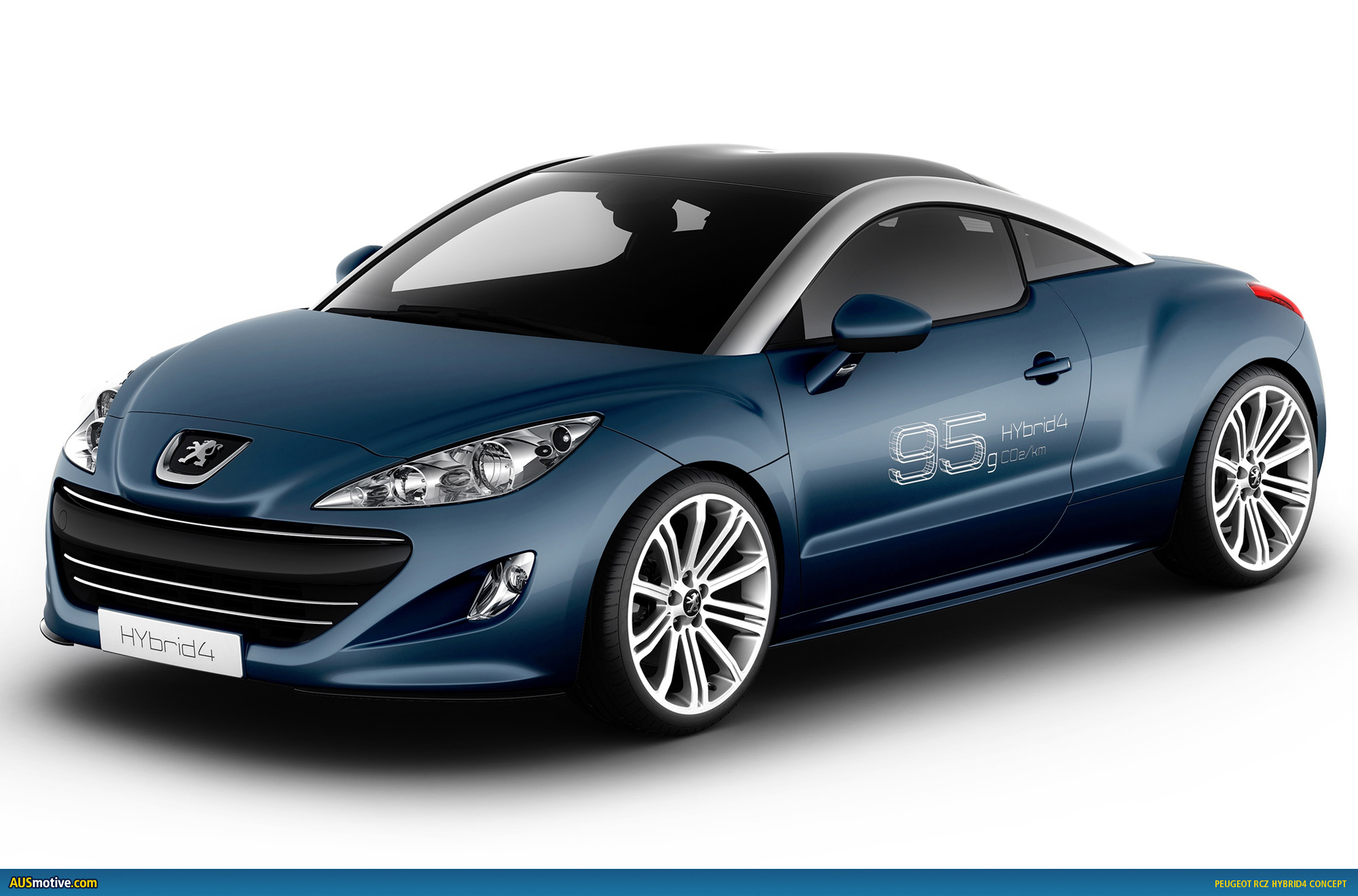
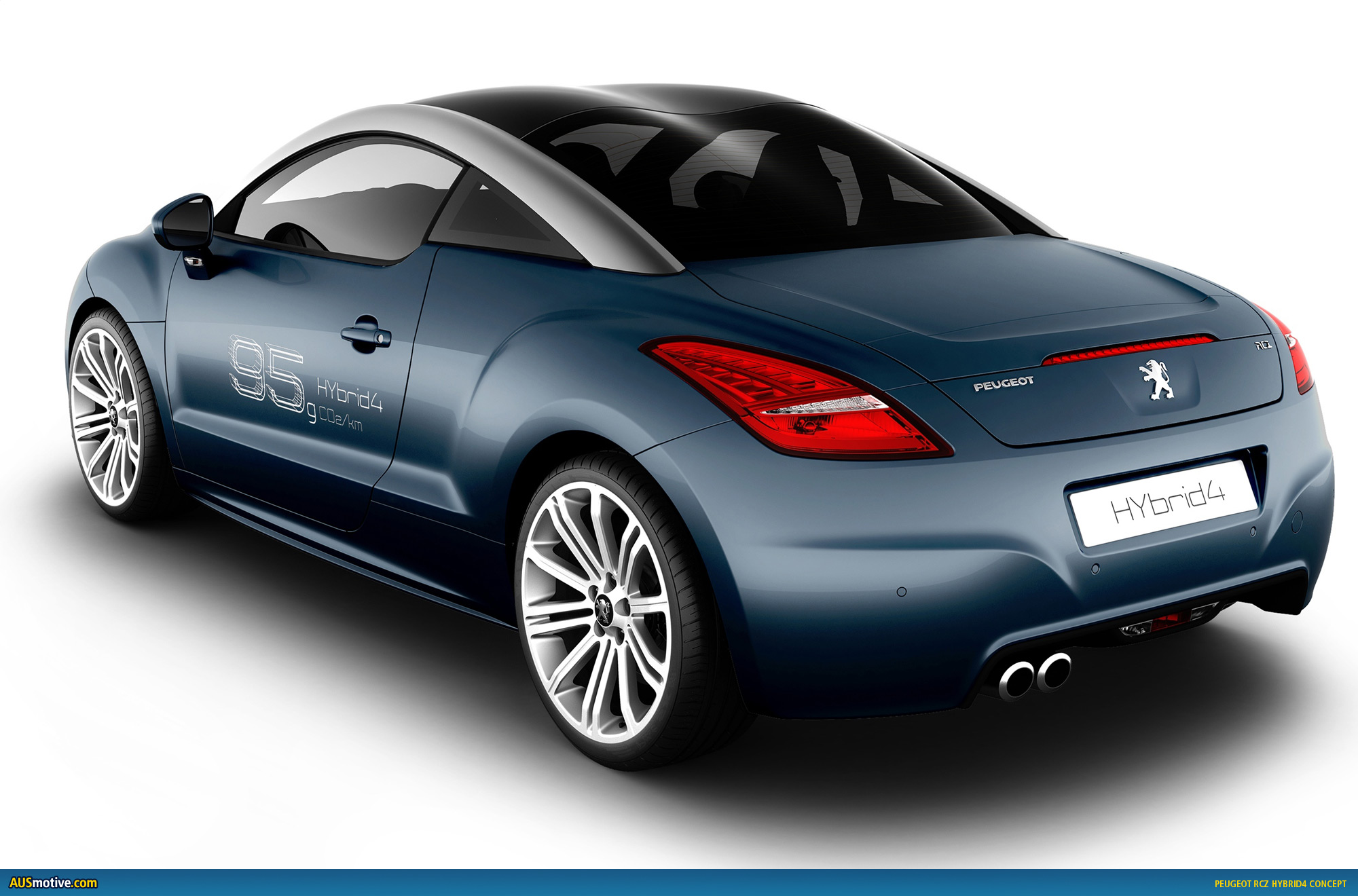
Peugeot RCZ HYbrid4 concept

You may remember the pics and details from Peugeot’s Audi TT clone that were about released a month ago. Now, Peugeot has announced that they want a piece of the green market too, with this RCZ HYbrid4 concept.

Headline figures are around 3.7l/100km, CO2 emissions of 95g/km and all while still having a smidge under 150kW to play with.

That’s not tricky part, though. The real headline feature of this car is that the power supplied is split between two engines, one driving the front wheels, the other powering the rears. A 2-litre diesel offering 120kW provides the go up front, while an electric engine sends an additional 28kW to the rears. Torque to the front is a healthy 300Nm, while that tiny leccy engine sends 200Nm of torque to the rear axle.

A pretty neat interpretation of all-wheel drive then!

Peugeot RCZ HYbrid4 concept

PEUGEOT RCZ HYBRID4 – CLEAN GREEN FUN

  • 200 bhp - 76.35 mpg and 95 g/km of CO2
  • Four-wheel drive
  • Multi-link rear suspension
  • First public viewing at the 63rd Frankfurt Motor Show

At the Frankfurt Motor Show, Peugeot will unveil a concept version of its exciting RCZ 2+2 coupé, the RCZ HYbrid4. Based on the same power train as the 3008 Hybrid4, it is powered by a 2.0 litre HDi FAP diesel engine with a maximum power of 163 bhp and a 37 bhp electric motor giving a total power output of 200 bhp.

Its creation clearly demonstrates the flexibility of the Peugeot HYbrid4 technology and the marque’s desire to offer this technology in different vehicle types across its model range (crossover, coupé ….)

With the innovative HYbrid4 technology, the RCZ HYbrid4 concept car achieves a level of fuel consumption and CO2 emissions previously unheard of in the world of the sports car: 76.35 mpg and just 95 g/km of CO2. This clearly shows that performance and respect for the environment are achievable together in one vehicle.

The RCZ HYbrid4 is powered by a 2.0 litre 163 bhp HDi diesel engine at the front and a 37 bhp electric power train at the rear. This gives a maximum power output of 200 bhp and a maximum torque of 221 lb ft at the front and 147 lb ft at the rear.

The hybrid power train also benefits the dynamic performance of the vehicle as the rear suspension now becomes a multi-link arrangement due to the HYbrid4 rear power train module, which also provides four-wheel drive.

The RCZ HYbrid4 concept car illustrates more than ever a new chapter in the history of Peugeot’s “lifestyle vehicles” and shows that, in the future, performance can live happily alongside respect for the environment.

Technical Data – RCZ HYbrid4

Engines

Front:

  • HDi Diesel
  • Capacity (cm3): 1997
  • Maximum Power @ rpm: 163 bhp @ 3,750 rpm
  • Maximum Torque @ rpm: 221 lb ft @ 1,580 rpm

Rear:

  • Synchronous Electric Motor With Permanent Magnets
  • Continuous / Maximum Power: 27 bhp / 37 bhp
  • Continuous / Maximum Torque: 74 lb ft / 147 lb ft
  • Combined Maximum Power HDi + Electric: 200 bhp
  • Transmission: 6-Speed Electronically Controlled Manual Gearbox (BMP6)

Performance (Driver Only)

  • Acceleration: 0 to 1000 m (s): 29.6; 0 to 62 mph (s): 8.5
  • In-gear acceleration: 18 to 37 mph in Auto (s): 2.8; 50 to 75 mph in Auto (s): 6.3
  • Maximum Speed (mph): 134 mph

Fuel Consumption

  • Urban Cycle: 67.3 mpg
  • Combined Cycle: 76.3 mpg
  • CO2 Emissions: 95 g/km

Electric Mode (Zero Emission Vehicle)

  • Fuel Consumption: 0 mpg
  • CO2 Emissions: 0 g/km
  • Maximum Range at Stable Speed: 2.80 miles

Dimensions (m)

  • Overall length: 4.287
  • Overall Width: 1.845
  • Overall Height: 1.359
  • Wheelbase: 2.612
  • Front / Rear Overhang: 0.934 / 0.741
  • Front / Rear Track: 1.580 / 1.593

Special Features

  • High-Voltage Nickel Metal Hydride Battery, Voltage 200 V, Capacity 5.5 Ah
  • 200 V to 12 V Converter to Supply Vehicle Network in ZEV Mode
  • Inverter: Operating Voltage Range: 150 to 270 V - Liquid Cooled
  • PTMU: GMP Control Unit Ensuring Optimal Fuel Consumption

Monday, September 14, 2009

2010 Vw Golf R


Car and Driver scoops the inside poop on the latest über-Golf headed to The Land of the Free. According the Csere-free buff book, the Golf R will offer the GTI’s four cylinder engine tuned to “an impressive” 270 hp with all wheel-drive to tame all those ponies. The R’s lighter, cheaper 2.0-liter turbo four may help the new top spec Golf sell more prolifically than the last top shelf Golf, which featured a heavier and more expensive 3.2-liter six, clocking in at $32,990 (msrp). Well, it couldn’t do any worse; you can still buy new ’07s. Car and Driver reckons VW will call the new car an R20 Turbo. As always, we reckon it all comes down to price/performance. The GTI is a stunner. The R20T would have to offer significantly better thrust and handling for a reasonable premium to make it. What are the odds? Meanwhile, if you haven’t driven the original R32, you should. Oh, yes.

Peugeot’s RCZ Hybrid will deliver 76.35mpg

2010_peugeot_rcz_05

2010_peugeot_rcz_02

2010_peugeot_rcz_06

Peugeot RCZ Hybrid Concept was announced to make its debut at this year’s Frankfurt Motor Show and but in the meantime we found out something about the production version of the car.

According to our sources, the new hybrid will deliver an impressive 76.35mpg when it goes on sale. The upcoming vehicle will carry a 163bhp 2.0-litre turbodiesel engine fitted with a stop-start system and with an electric motor that is good for 37bhp and 147lb ft at full tilt. An interesting feature will be the capability of the car to run in front drive, -wheel drive and purely rear drive modes. According to the manufacturer, the powertrain can also easily be converted to use a petrol motor instead of diesel which means that we will see two hybrid versions of the RCZ Hybrid!

2010_peugeot_rcz_09

Sunday, September 13, 2009

2010 Smart Fortwo Electric Car - Detail, Photo, Specs

2010 Smart Fortwo Electric Drive


2010 Smart Fortwo Electric Drive

From mid November 2009 the new smart fortwo electric drive will roll off the production line at the smart factory in Hambach, France. Unlike its predecessor, the electrically driven smart fortwo of the second generation is fitted with an innovative and highly efficient lithium-ion battery. It is housed in a space-saving position between the axles, which means that space is not compromised in any way in the intelligent two-seater vehicle. A 30 kW electric motor is fitted at the rear. This provides for good acceleration and high agility with 120 Newton metres of torque that are immediately available. The smart fortwo electric drive can be charged at any normal household socket. In Germany, a full battery charge costs approximately two euros and is sufficient for a range of around 135 kilometres – more than enough for city traffic. smart has made electric drive a practical alternative for zero-emission mobility in urban areas. The new smart fortwo electric drive is initially being leased to customers in Berlin and other cities in Europe and the USA who will subject the environmentally friendly trendsetter to intensive real-world testing in tough everyday conditions. From 2012 it will be available to anyone interested.

Environmental friendliness and contemporary functionality have been defining features of the smart fortwo ever since it was launched more than ten years ago. Since then its innovative concept has combined sustainable, forward-looking technologies with individual urban mobility. With a length of just over two and a half metres the extremely compact vehicle can also park perpendicular to the flow of traffic. In addition, the space-saving and environmentally friendly two-seater currently has the lowest fleet consumption and brings its occupants to their destination comfortably and safely. Its design is fresh, youthful, modern and yet sophisticated and has made it an automotive lifestyle icon which shows that mobility, responsibility to the environment and joie de vivre are compatible with one another. The smart fortwo has established a class of its own.

smart fortwo electric drive offers innovative driving fun

The new smart fortwo electric drive from the popular brand that will roll off the production line from mid November 2009 is a logical continuation of a very ambitious goal: the production of a well-engineered, attractive city car that has no local exhaust gas emissions i.e. a zero emission vehicle. smart started emission-free driving in the tough everyday conditions of city traffic in 2007 in London. Since then 100 smart fortwo electric drives of the first generation have been in practical customer operation. The feedback from the UKcapital has been very positive and confirms the high degree of maturity of this vehicle concept.

In 2008 smart presented the second generation smart fortwo electric drive, a more advanced electric drive with an innovative lithium-ion battery. Lithium-ion technology has decisive advantages over other types of batteries including higher performance, shorter charging times, a long life and high reliability. Marc Langenbrinck, responsible for brand management at smart, says: "The second generation smart fortwo electric drive is based on a successful and accepted vehicle concept with character and inherent environmentally friendly characteristics. Its innovative electric battery drive makes it the perfect car for the city: it is agile, economical and climate-friendly. Motoring with zero local emissions in an urban environment has become a reality. This equates to driving fun with a clear conscience."

Electric drive taken into account in the very first concept

Electric drives have been part of the smart concept right from the start. The later integration of the components needed for electric drive was planned at a very early stage. For example, there is space for the battery in the underfloor between the axles where the tank is located in other smart models . The electric drive module does not limit the space available in the smart fortwo electric drive in any way; there is just as much interior and luggage compartment space as in a smart fortwo with a combustion engine.

Powerful drive

A 30 kW magneto-electric motor is installed at the rear of the new smart fortwo electric drive and reacts immediately and without delay. Powerful torque of 120 Newtonmetres is immediately available. This results in a surprising amount of power when pulling away. The smart fortwo electric drive accelerates from 0 - 60 km/h in 6.5 seconds – just as quickly as a petrol model which it initially leaves behind it. Its maximum speed has been deliberately limited to 100 km/h, a suitable speed for the city. Thanks to the power characteristic of the electric motor, the smart fortwo electric drive needs just one single fixed gear ratio. There is no need for any gear changing – a major advantage in dense city traffic. To reverse, the engine's direction of rotation changes.

The second generation smart fortwo electric drive is powered by a lithium-ion battery from Tesla Motors Inc. with capacity of 14 kWh. It is simple to charge at any fused 220 Volt socket.
A fully charged battery is sufficient for up to 135 kilometres of driving fun (NEDC). This range is more than enough for city traffic as studies have shown that cars drive an average of 30 - 40 kilometres per day in towns and cities. For this, the vehicle only needs to be charged for three hours. Plugging the car in overnight will fully recharge the battery.

Electronics optimise the battery charge status and power consumption

Special electronics ensure that all is well with the battery. The electronics also monitor the charging process and control the capacity display.The vehicle's power electronics supply the electrical system with electric current from the battery via a DC/DC converter. In addition, they also control the heating and air conditioning, for example, to minimise the strain on the battery. Clever drivers can air condition their smart fortwo electric drive in advance as long as their vehicle is being charged at home - the long-standing dream of stationary cooling becomes a reality! No other car offers this comfortable option.
The new second generation smart fortwo electric drive is based on the smart fortwo coupé/cabrio passion. As well as air conditioning with automatic temperature control all the equipment features of the popular passion equipment line are included. In addition to the battery indicator, an ammeter shows the consumption and the recuperated energy.

Very low costs

Based on German electricity prices it costs approximately two euros to drive the smart fortwo electric drive for 100 kilometres (even cheaper with off-peak electricity). This is less than the price of two litres of petrol. Electric power is much cheaper in lots of countries. The maintenance costs are considerably lower than those of a smart with a combustion engine as the battery, motor and other components of the electric drive are maintenance-free.

In addition to the low running costs, there are further cost advantages in lots of countries and cities. For example, drivers of a smart fortwo electric drive are entitled to national subsidies, tax advantages or exemption from local toll charges such as the city centre congestion charge in London.

smart fortwo electric drive in major cities in Europe and the USA

From the end of 2009 the smart fortwo electric drive will be delivered to selected leasing customers. Leases will be offered for a period of four years and 60,000 kilometres. The first vehicles are destined for the "e-mobility Berlin" project . Here, in cooperation with the energy provider RWE and with the support of the German government and the city of Berlin Daimleris creating the conditions for running battery-driven vehicles with no local emissions.This includes setting up a network of electricity charging stations that enable intelligent communication between electric vehicles and the power network so that the battery can be charged when electricity is cheapest.

Further vehicles of the new generation smart fortwo electric drive will take to the roads of Hamburg, Paris, Rome, Milan, Pisa, Madridand they will also be deployed in further projects in Europe. Some of the models will also go to cities in the USA.

There is already a very lively demand for the smart fortwo electric drive, and from 2012 it will be produced in large volumes as a normal part of the smart range and sold via the smart dealer network. This underlines the pioneering role of the car brand on the way to attractive individual mobility with zero local emissions in cities and urban population centres.

2010 Smart Fortwo Electric Drive


2010 Smart Fortwo Electric Drive

Leaked Images Of The Audi R8 Spider

audi-r8-spider-leak-1

Audi R8 Spyder

It’s true — Audi will unveil their R8 Spider at the Frankfurt Show next week, and although this news is no secret we now have images to tease what the model will look like. The new leaked images of the R8 Spider reveal a black canvas roof which will hide the rear-mounted engine.

The front will have a powerful-looking grille that features LED daytime running lights, while the rear will have LED lights. The tailpipes will be visible from the sides of the car, while there will then be a massive diffuser for air flow.

Audi will launch the R8 Spider with the 5.2-litre V10 engine that pumps out 386kW with 530Nm of torque. The transmission unit will be a 6-speed manual box or the R Tronic sequential shifter. Power will run through the Quattro all wheel drive where there will be the ability to send 85 percent of the torque to the rear wheels

Friday, September 11, 2009

Spy Shots: 2011 Audi A4

2011 Audi A8 spy shots

The current Audi A8 has been on sale since 2003 and since that time has only received a minor facelift to keep it fresh alongside the updated Mercedes-Benz S-Class, Lexus LS and new BMW 7-Series. The minor styling changes implemented during the recent facelift will have to soldier on for at least another year as the next-generation ‘D4’ A8, according to Audi CEO Rupert Stadler, won’t arrive until the second half of next year as a 2011 model. We should get our first look at the car, however, this November.

An official teaser, released as part of the automaker’s centenary celebrations earlier this year, revealed a few more design details for the A8, including the now-signature Audi LED daytime running lights and what seems like a much shorter stance.

These latest spy shots show the car’s overall proportion out on the road, as well as a few finer details such as the shape of its new grille and LED tail-lamps.

New audi S5 Sportback roars in for debut


The A5 sportback isn’t in showrooms yet. But Audi will turn up the heat on the new model by revealing this – the new S5 version – at Frankfurt.

Under the bonnet, the five-door coupé gets the same 3.0-litre supercharged V6 that’s found in the latest S4 and S5 Cabriolet.

This means a power output of 328bhp and 440Nm of torque from 2,900rpm. As a result, the Sportback should complete the sprint from 0-62mph in 5.4 seconds, and will go on to an electronically limited top speed of 155mph.

Power is fed to the quattro four-wheel-drive system via a seven-speed S tronic dual-clutch gearbox. The top-of-the-range model is marked out from the rest of the line-up by 19-inch alloy wheels, silver wing mirror housings and S badges.

Inside are electrically adjustable Nappa leather sports seats.

The standard Sportback goes on sale here in October, but the S5 version isn’t due until the spring.

Audi has confirmed that it will also take the wraps off its A4 3.0 TDI Clean Diesel at Frankfurt.